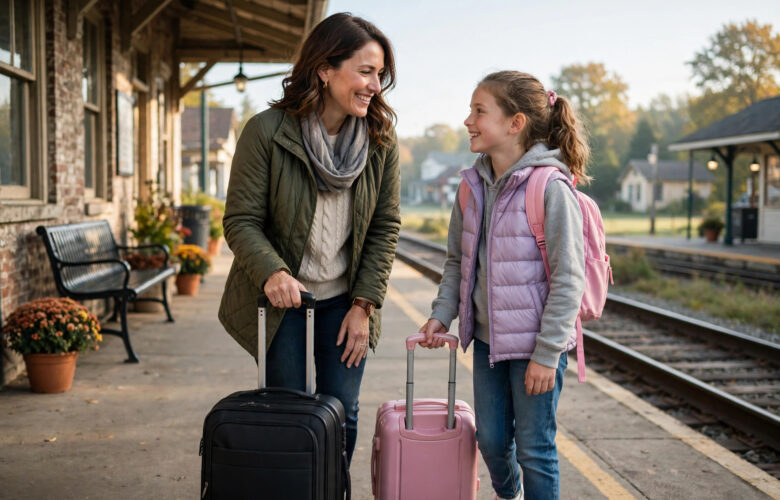
She is too old for the trips you planned when she was seven and too young for the trips you take with your adult friends, and that in-between age is exactly why a first trip together feels so hard to pitch. A tween does not need a bigger vacation. She needs a first trip that treats her as a partner in the plan, moves at a pace her body and mood can keep, and leaves room for the phone, the quiet, and the conversation. This guide shows you how to build that trip, decision by decision.
Mother Daughter Outfits
Her First Trip, Planned With Her
Start with the trips hub she will help you choose from, then use this guide to plan it at a tween pace.
Key Takeaways
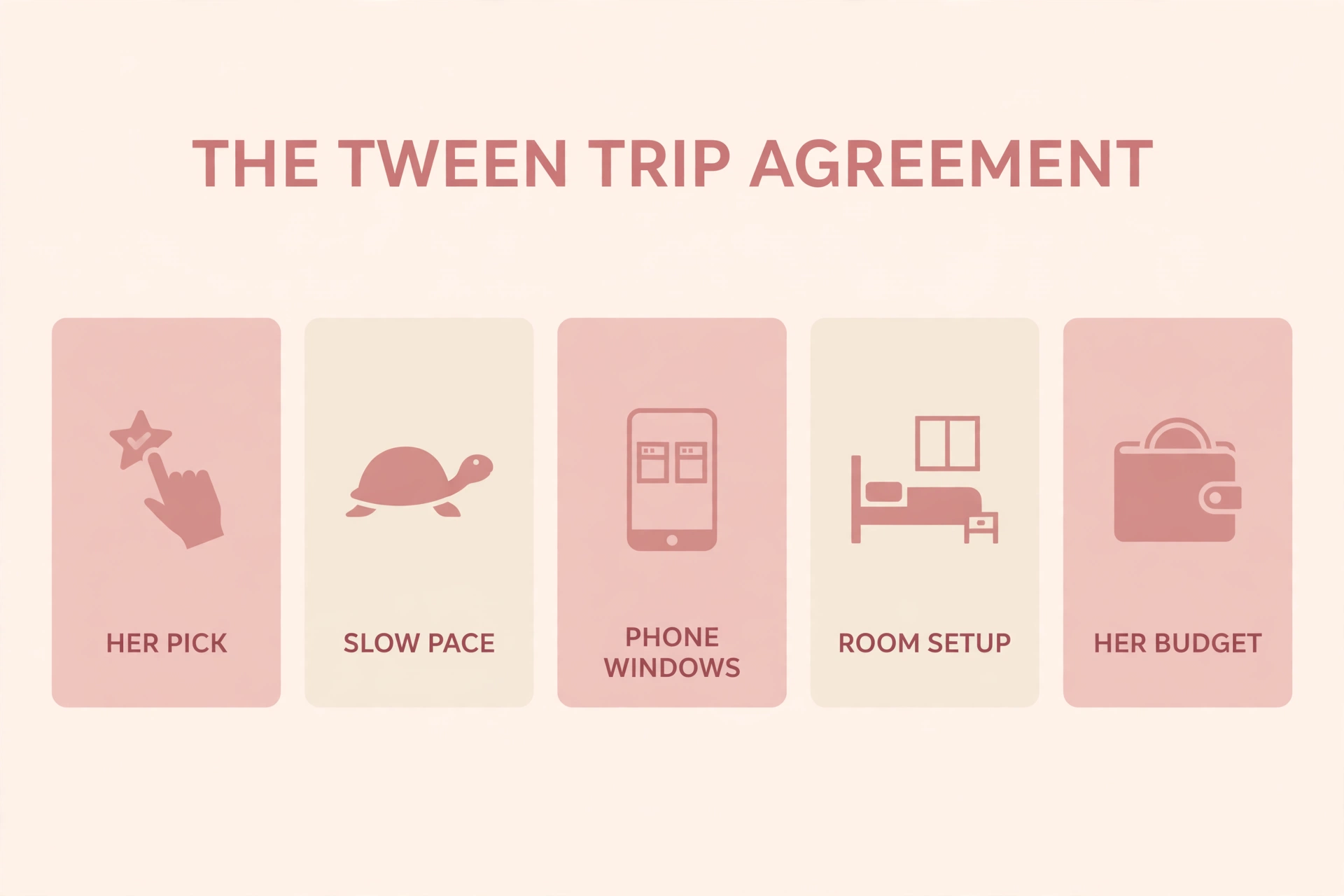
- Give your tween a real vote before you book anything, because a first trip she helped design is a trip she shows up for.
- Keep the first trip short and close, with one base and one anchor a day, so success feels easy to repeat.
- Agree the phone rules together before you leave, in windows rather than bans, and hold yourself to the same windows.
- Talk honestly about the room setup, sleep, and privacy before the first night, not during it.
- Show her a simple budget she can track, and let her manage one small piece of it herself.
Table of Contents
- Start With Her, Not the Destination
- Choosing a First Trip a Tween Can Win
- Give Her a Real Say in the Planning
- Pacing the Days at Tween Speed
- Phone Rules You Both Keep
- Sharing a Room Without the Friction
- A Budget She Can See and Touch
- Safety Basics for a First Trip Together
- A Texas First Trip That Follows Every Rule
- Our view
- FAQ
Start With Her, Not the Destination
Most first-trip planning fails in the first five minutes, because it starts with a place. A mother finds a town she loves, books it, and then tries to sell it to a twelve-year-old who had no part in choosing it. Tweens read that instantly. The trip becomes something done to them, and they spend it at arm’s length, waiting for it to be over. Start with her instead. Ask what a good day away would even look like to her right now, and listen for the shape of the answer rather than the specifics.
What a tween is actually deciding
Between ten and thirteen, your daughter is working out who she is when she is not at school or at home, and a first trip lands right in the middle of that project. The guidance in the 5 Cs framework for young teens describes this age as a time of growing independence and identity building, and travel is one of the safest places to practice both. She gets to choose, navigate, order, and decide in a setting where the stakes are small and you are right beside her.
That is why this guide is deliberately different from our general hub on the best mother daughter trips, which speaks to mothers and adult daughters planning as equals with adult tastes. A tween trip has a different job. It is a rehearsal for a lifetime of traveling together, and it succeeds when she comes home wanting a second one. Everything below serves that single goal.
The comparison that settles the shape of the trip
The table below puts the two kinds of first trip side by side. Neither column is about budget or distance. The difference is who the trip is designed around, and tweens can feel that difference within the first hour.
| Decision | Planned for her | Planned with her |
|---|---|---|
| Destination | Chosen by mom, announced as a surprise | Shortlisted together, her pick inside a parent-set frame |
| Days | Packed from breakfast to bedtime | One anchor a day, with open space she can fill or leave empty |
| Phone | Confiscated or fought over daily | Agreed windows that apply to both of you |
| Money | Invisible, every request a negotiation | A visible budget, with one small piece that is hers to run |
Read the right-hand column as a checklist. If a plan you are building drifts toward the left, fix the decision, not the destination. The place matters far less than she expects, and far less than you fear.
Choosing a First Trip a Tween Can Win
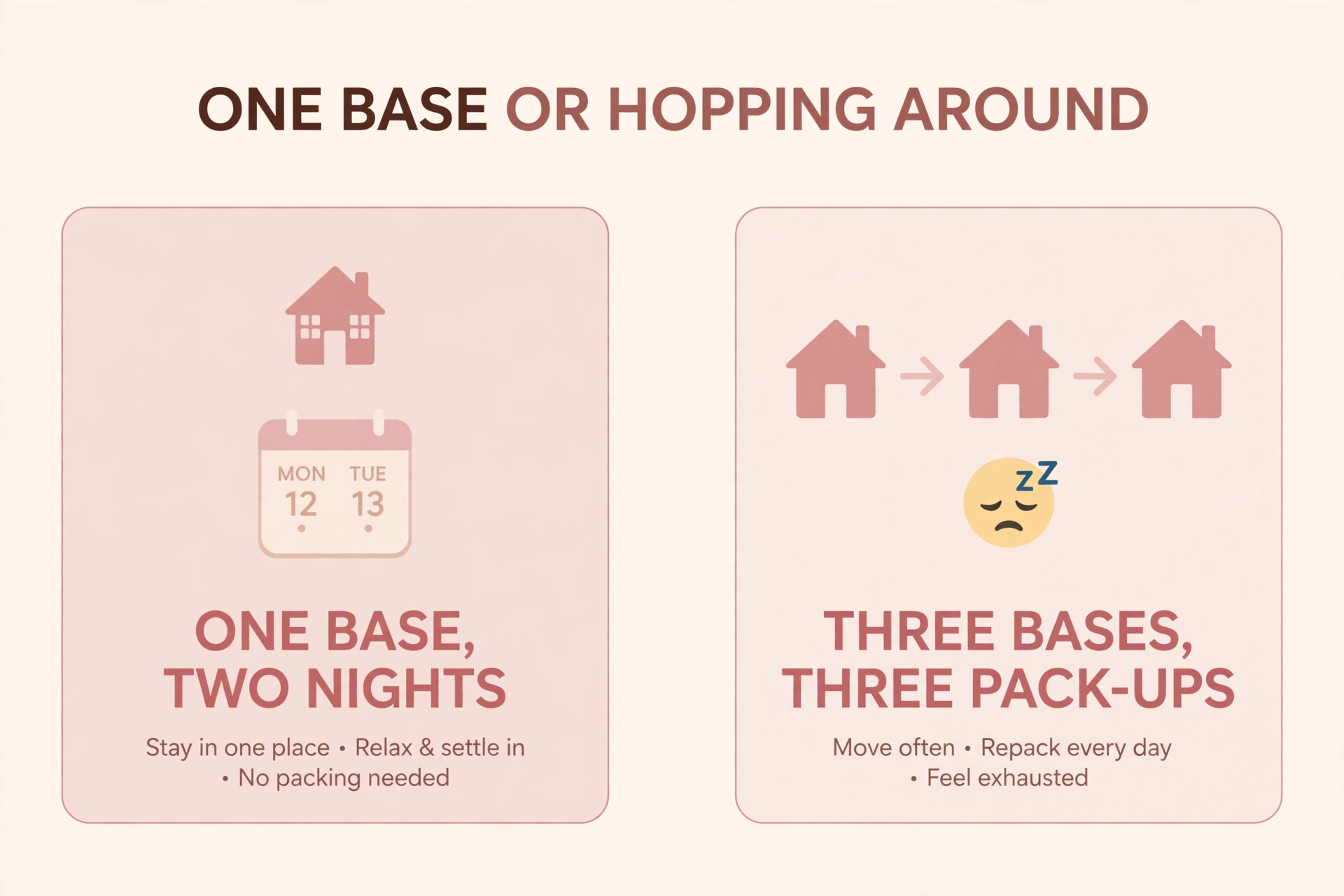
A first trip should be almost impossible to fail. That means short, close, and simple. One or two nights is plenty. A drive or train ride she can enjoy rather than endure is better than a flight with connections, and one base beats a tour of three towns, because every move costs energy a tween would rather spend on the fun part. If she has never slept away happily, keep the first trip inside the distance you could drive home from if the night goes wrong. Knowing the exit exists makes most tweens braver, not weaker.
Distance, length, and the one-base rule
Think in terms of a morning’s travel, not a day of it. Our departure-city guide to weekend trips from Houston, Dallas and Austin works on exactly this logic for Texas families, and the principle travels anywhere: the shorter the journey, the more of the trip is the trip. For a first outing with a tween, that ratio matters even more, because her patience for transit is real but finite, and a drained arrival poisons the first evening.
Choose the anchor with her interests in front of you. A space-mad tween will walk happily for hours through the Space Center tram tours, which is exactly the kind of anchor a first trip wants: big, absorbing, and impossible to rush. A nature-first tween might choose a park summit instead, and the Enchanted Rock State Natural Area page shows how Texas Parks and Wildlife frames that climb honestly, as a real hike with a real reward at the top.
One base also means one unpacking, one room to make familiar, and one neighborhood to learn together. By the second morning she knows where breakfast is and which corner the good bakery sits on, and that small competence is a genuine pleasure at twelve. Save the multi-stop adventure for the third or fourth trip, when she asks for it.
Pick the season for her, too
Season changes a tween trip more than it changes an adult one. Heat, crowds, and long lines hit younger travelers harder, and a first trip in a gentle season stacks the odds in your favor. Texas families can borrow the thinking in our guide to winter trips in Texas, where the same destinations run cooler and calmer. Wherever you live, choose the version of the place that asks the least endurance from her, and keep the ambitious version for later.
Give Her a Real Say in the Planning
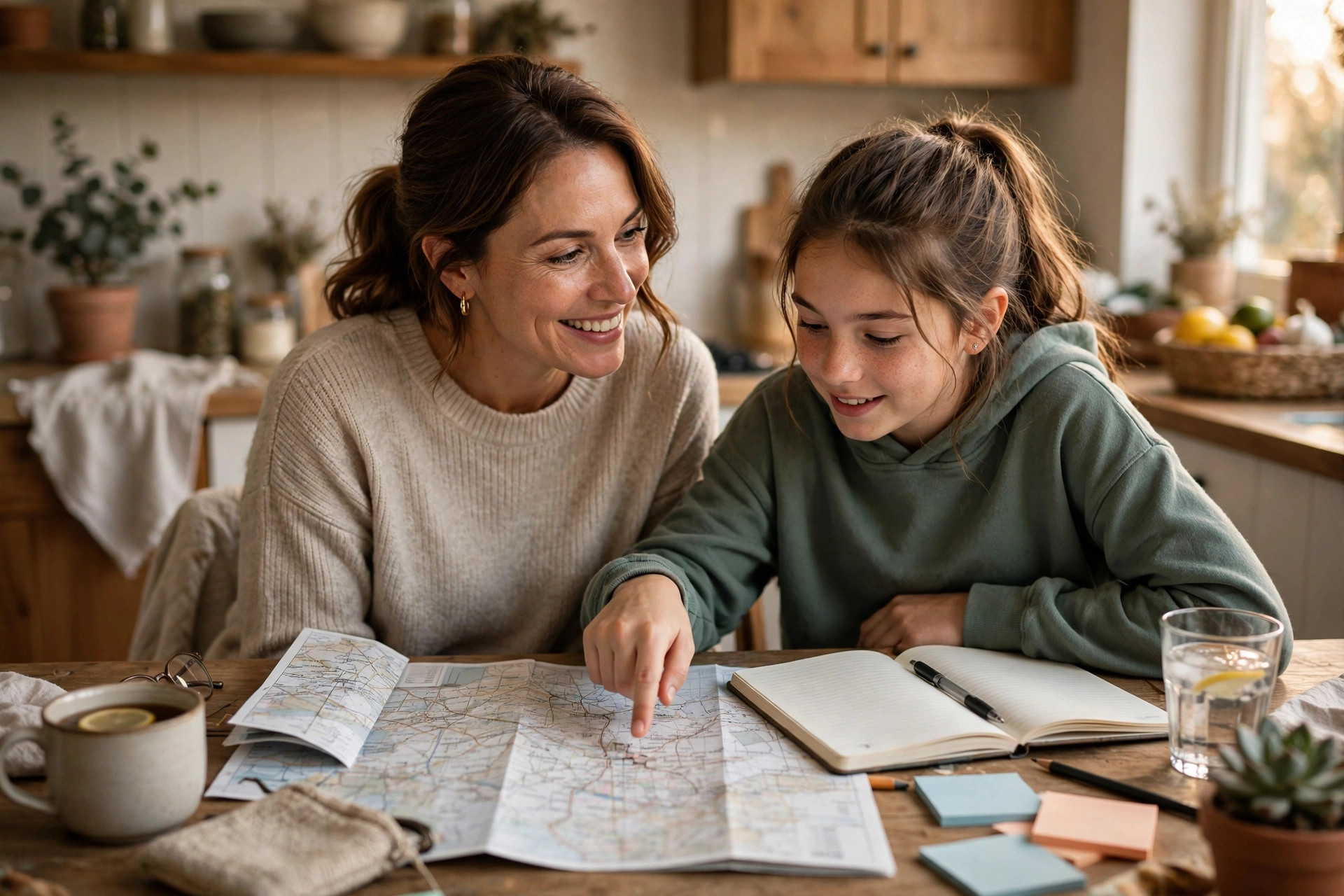
Her say has to be real, which means it has to be able to change the outcome. Offer choices inside a frame you set: two or three destinations you would genuinely enjoy, two anchor activities per day to pick between, one meal a day that is entirely her call. A vote she can win teaches her that her preferences count. A vote that always loses teaches her to stop voting, and you will feel that silence for the rest of the trip.
The planning session that starts it all
Sit down together with a map, a notebook, and a drink she likes, and treat the session as the first event of the trip rather than homework before it. Let her research one thing herself and report back. The family travel safety tips from the American Academy of Pediatrics assume children are part of the travel party’s preparation, and that principle extends naturally to planning: a tween who helped build the plan understands it, follows it, and defends it when she gets tired or homesick at hour six.
Write the plan down where she can see it, in her words where possible. Then, and this is the hard part, let the plan be the plan. If she chose the science museum over the historic house, you go to the science museum with your whole heart. Our wider guide to trips across the USA can wait on the shelf for the trips she will plan with you as a teenager and an adult. This one is hers.
Let her own one whole piece
Give her one complete piece of the trip to run: navigating from the station to the hotel, choosing and booking the anchor activity inside the budget, or being in charge of the trip playlist and the photo album. Ownership converts a passenger into a partner. It also gives you something specific to praise that is not her behavior, which tweens hear very differently.
Pacing the Days at Tween Speed
Tween energy is real, but it is not adult energy. It arrives in bursts, crashes without warning, and is closely tied to food, sleep, and whether the last hour felt like hers. A day built for an adult sightseeing appetite will break a tween by mid-afternoon, and the break will look like attitude when it is actually exhaustion. Build the day around one anchor, one meal to look forward to, and one stretch of nothing.
One anchor, then breathing room
Choose a single anchor per day: one museum, one park, one boat ride, one market morning. Around it, leave space that has no job. That space is where the trip actually happens for a tween. It is the bench where she tells you something true, the shop she wanders into on a whim, the second ice cream that becomes the story she retells. Our festival packing checklist was written for event days, but its rhythm of anchor, rest, anchor is the same rhythm a tween day needs.
Protect sleep with the same seriousness. The CDC sleep guidance for traveling children stresses planning for the unexpected and keeping children’s health routines intact on the road, and a tween whose bedtime slides three hours later will pay for it the next day, with interest. Keep wake times gentle, and never schedule the day’s anchor for the first hour of the morning.
Food is pacing, too
A hungry tween is a miserable travel companion, and the fix is embarrassingly simple: feed her before she is hungry. Carry snacks she chose, stop for lunch before the crash, and treat one treat a day as a planned pleasure rather than a surrendered negotiation. When you plan a Texas first trip, the walkable districts in the Houston road trip guide and the clustered sights on the top Dallas experiences list both make this easy, because food is never more than a short stroll from the anchor.
Phone Rules You Both Keep
The phone is where first trips go to fight. A total ban invites rebellion and secret use, and unlimited use dissolves the trip into two people scrolling side by side. The middle path is windows: agreed times when phones are welcome, and agreed times when they are away, decided together before departure and applied to both of you without exception.
Build the agreement from her media life, not against it
The AAP’s 5 Cs questions for young teens encourage parents to talk about what media crowds out, and to set device-free times such as car rides and mealtimes so a teen has your full attention. Borrow that structure directly. Ask her which times she would protect if the rule were hers. Most tweens, asked honestly, will protect meals and the anchor activity themselves, because they know perfectly well what the phone does to a good hour.
The companion guidance on making a family media plan adds the piece parents forget: children accept limits far better when they had a voice in creating them, and they resent limits that adults do not follow. So the windows bind you too. Your phone goes away at the same meals, during the same anchor, on the same drive. If you break the rule for a work message, say so out loud and keep it short. She is watching the fairness, not the minutes.
Give the phone a job on the trip
A phone with a job is not the enemy. Make her the trip photographer, the navigator, or the keeper of the shared album you will both add to. She can message friends during the agreed evening window and send one photo a day to the family chat. The device becomes a tool of the trip rather than a rival to it, and the windows stop feeling like a punishment because the phone’s best uses are scheduled, not stolen.
Sharing a Room Without the Friction
For many tweens, the room is the trip’s tender spot. She is at the age where privacy has started to matter fiercely, where changing clothes feels different than it did at eight, and where sleep habits, hers and yours, suddenly have to negotiate. Talk about all of it before the first night, in a matter-of-fact way that gives her language for what she needs.
The conversation to have at home
Cover the practical ground in one short conversation. Who showers when. Whether the bathroom door is a changing room for both of you. What the lights-out plan is, and whether she can read or listen to something with headphones after you sleep. Whether one bed or two matters to her, because for some tweens sharing a bed with mom is the best part of a trip and for others it is the reason they dread it. Neither answer is wrong. Knowing it in advance is everything.
The Dallas multigenerational travel guide makes a related point for mixed-age groups: accessible pacing and honest planning about rest keep everyone included. A tween is a group of one with strong views. Plan her rest with the same respect you would give a grandmother’s, and she will feel the respect in it.
Small privacies that cost nothing
A sleep mask, her own earbuds, a corner of the room that is hers for her bag and her things, a knock-and-wait habit at the bathroom door. These tiny arrangements tell her that her growing need for privacy is normal and welcome on this trip, not an inconvenience to it. Mothers who get this right often find the room becomes the trip’s confessional, the place where the day’s real conversation happens after lights out. Our guide to casual weekend style even treats the shared getting-ready hour as part of the fun, which it can be, once the privacy ground rules are settled and nobody is guessing.

A Budget She Can See and Touch
Money is invisible on most family trips, and invisible money makes every request a negotiation and every no feel personal. A first tween trip is the perfect place to make money visible at her scale. Show her the whole budget in simple lines: getting there, the room, food, anchors, treats. Then hand her one line of it to run.
Her money, her decisions
Give her a set amount, in cash or on a card you control together, that covers her treats and souvenirs for the whole trip. When it is gone, it is gone, and that rule, agreed in advance, ends the daily pleading more kindly than any lecture. She will make one purchase she regrets. Let her. A small regretted purchase at twelve, inside a budget she managed, is one of the cheapest financial educations she will ever get, and she will remember the lesson because the trip made it vivid.
Talk through the trade-offs out loud as you plan, in the spirit of the shared-palette thinking in our guide to building a matching wardrobe on a budget: a fixed pot, spent where it shows. The fancy lunch or the boat ride. The extra night or the better room. Tweens rise to real trade-offs. What they cannot rise to is a budget they are not allowed to see.
Safety Basics for a First Trip Together
Safety talk lands better as competence than as fear. A tween who knows the plan for getting separated, who carries the hotel’s name and your number somewhere other than her phone, and who has walked the route from the room to the lobby once with you, is a tween who can relax. Cover the basics once, clearly, and then let the trip be fun.
The short list that covers almost everything
Agree a meeting point in every new place, and a simple rule: stay where you are and let the adult come to you. The traveling with children guidance from the CDC recommends planning for unexpected events, knowing where to get care, and packing a small health kit, and every one of those steps is easier when your traveling companion has heard them as part of the plan rather than as a warning. If you fly, the TSA guidance on traveling with children explains the screening process in advance, and walking a tween through it beforehand turns the checkpoint from a stress point into a procedure she already understands.
If the first trip crosses a border, the homework grows. The State Department’s page on traveling with minors explains that some countries require a notarized consent letter from the parent who is not traveling, and that you should always carry evidence of your legal relationship to your child. For a first trip, most families keep it domestic, and our Europe city breaks guide will be waiting when she is older and the paperwork feels worth it.
A Texas First Trip That Follows Every Rule
Here is the whole method in one worked example, because Texas is where this site’s readers keep proving the demand is. Take a twelve-year-old from Houston to Galveston for two nights. She picks Galveston over Brenham from your shortlist of two. Her anchor on day one is the historic Strand, from the Strand district guide, and on day two she chooses between the beach and a mansion tour. The full destination picture sits in our Texas trips hub, which owns the where. This trip owns the how.
Two days, her fingerprints on both
Day one runs at her pace: a late start, the drive down with her playlist and phones away, lunch where she chooses, the Strand in the afternoon, and an evening window for messages and the shared album. Day two holds one anchor and a long, empty middle. If a park day calls instead, Brazos Bend State Park sits the same distance from Houston in the other direction, and its lake trails make a gentle first anchor for a nature-minded tween. Either way, she manages the treat budget, navigates you back to the hotel once, and picks the dinner spot on the last night.
Notice what this example does not contain. No dawn alarms, no four-stop days, no confiscated phone, no surprise itinerary. It looks almost too simple, and that simplicity is the entire strategy. When she asks, somewhere on the drive home, when the next one is, you will know the first trip did its job. The mountain trips guide and the trips in Europe hub are the natural next shelves to browse together, in that order, as her appetite grows.
Our view
We think the first trip with a tween succeeds or fails before anyone packs a bag. It succeeds when she helped design it, when the days move at her speed, when the phone rules bind her mother too, and when the money is something she can see and partly steer. Get those four things right and almost any destination works, because what she is really testing is whether traveling with you feels like being treated as a person. Make it feel that way once, and she will ask for the next trip herself. — Mother Daughter Outfits
FAQ
What is the best age for a first mother daughter trip?
Anywhere in the ten to thirteen window works, because the method matters more than the birthday. A ten-year-old needs shorter days and more snacks. A thirteen-year-old needs more say and more privacy. Adjust those two dials and the same structure carries the whole age band.
How long should a first trip with a tween be?
One or two nights. A first trip is a rehearsal, and rehearsals should be short enough to end while everyone still wants more. If it goes beautifully, book the longer version next time, and let her help choose it from the ideas in our best mother daughter trips hub.
What if she wants to stay on her phone the whole time?
Do not fight the phone head-on. Agree windows before you leave, give the phone real jobs like photographer and navigator, and hold yourself to the same windows. The family media plan approach works because she helped write the rules. If she still retreats to the screen, shorten the day’s plan rather than escalating the rule. Tired tweens scroll. Rested ones talk.
Should we share a room or book two?
Share the room on a first trip, but settle the privacy details first: beds, bathroom, changing, lights out. Two rooms can come later, when she is older and the trip is longer. The shared room, handled with respect for her privacy, is where much of a first trip’s closeness actually happens.
What should she pack and carry herself?
Her own small bag, packed from a list you make together, carried by her from door to door. Add the festival packing checklist habit of one shared kit for chargers, snacks, and a mini first-aid pouch. Carrying her own bag is part of the competence the trip is building, and most tweens are quietly proud of it by day two.
Planning a Trip or a Matching Look?
Start with the guides other moms and daughters actually use — the Texas trips hub, the Europe breaks, and the matching-outfit guides for every age.
Sources
- Traveling with Children — CDC Travelers’ Health
- Tips for Safe and Stress-Free Family Travel — HealthyChildren.org
- Traveling with Children — Transportation Security Administration
- Travel with Minors — U.S. Department of State
- Kids and Screen Time: The 5 Cs Questions for Young Teens — HealthyChildren.org
- Screen Time and Temper Tantrums: Helpful Tips for Parents — HealthyChildren.org
- Road Trip Guide from Houston — Visit Houston
- Top Things to Do in Dallas — Visit Dallas
- Multigenerational Travel Guide — Visit Dallas
- Brazos Bend State Park — Texas Parks and Wildlife
- Enchanted Rock State Natural Area — Texas Parks and Wildlife
- Tram Tours — Space Center Houston
- The Strand Historic District — Texas Film Commission