As an Amazon Associate I earn from qualifying purchases.
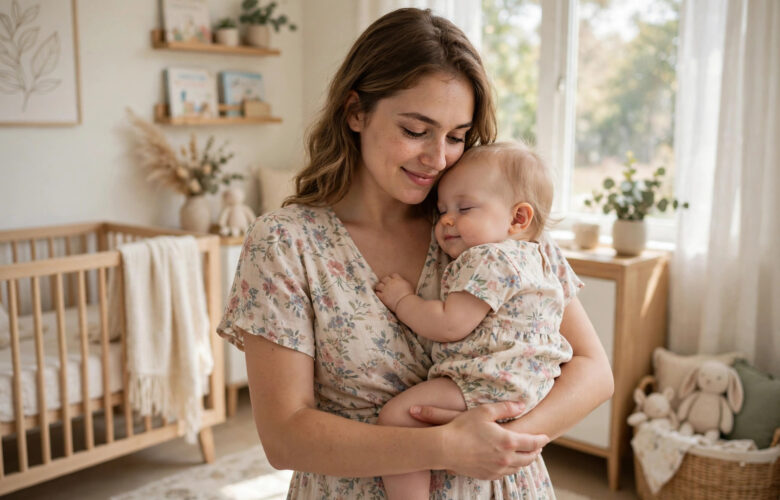
Matching in the first year is not about tiny versions of adult clothes. It is about a christening morning, a first photograph you will keep forever, and a first holiday where everyone wants to hold the baby, all while her skin is new, her feeds are frequent, and your own body is still changing week to week. This guide puts fabric safety and comfort first, is honest about postpartum fit, and then shows you how to coordinate gently for the occasions that actually fill a baby’s first year.
Mother Daughter Outfits
Her First Year, Dressed Together
Start with the matching guides for every age and occasion, from first photos to family holidays.
Key Takeaways
- Choose the baby’s fabric first, soft, breathable, flat-seamed and free of loose trim, then find your matching version in the same color family.
- Skip ribbons, strings, neck ties and detachable decorations on anything a baby wears, and check every button and snap before each wear.
- Dress for feeding and diaper changes, not just the photograph, with front openings for her and lift, wrap or button access for you.
- Buy your postpartum size as it fits now, with stretch, a defined waist you can adjust, and room to sit, lift and carry comfortably.
- Treat matching pajamas as photo and awake-time outfits, and follow safe sleep guidance for every actual sleep.
Table of Contents
- Start With Fabric, Not the Print
- The Safety Check Before Any Outfit Goes On
- Postpartum Fit, Said Honestly
- Christenings and First Formal Occasions
- First Photos Without the Fuss
- First Holidays, Paced for a Baby
- Three Matching Sets for the First Year
- Feeding, Changes and the Bag by the Door
- Washing and Care for Tiny Clothes
- Our view
- FAQ
Start With Fabric, Not the Print
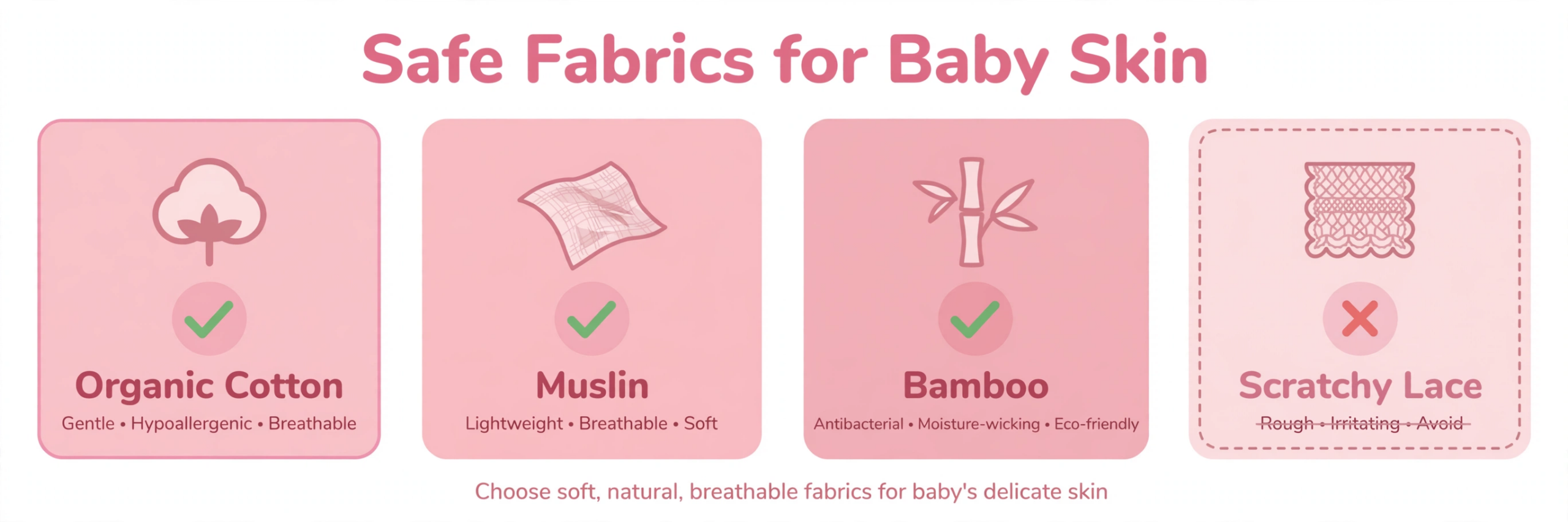
Every matching set looks sweet in a listing. The question that matters is how it feels against skin that has been in the world for weeks. The tips for dressing your baby from HealthyChildren.org give the practical starting point: look for stretchy fabric, loose-fitting sleeves, front snaps or zips, and no ribbons or strings, and dress a baby in about one more layer than you are wearing. That single page rules out half the novelty outfits on the market, because a stiff collar, a tight binding at the neck or a scratchy seam is not a small flaw on a newborn. It is the whole outfit.
Fabric guidance from a university extension points the same way. The children’s clothing comfort guide from New Mexico State University explains that cotton and cotton blends absorb moisture and let it evaporate, that knitted fabrics mold to the body without restricting movement, and that harsh textures, bulky seams and scratchy fasteners irritate sensitive skin. Read that beside any product description and your shortlist writes itself: soft knit, flat or covered seams, tags on the outside or no tags at all, and nothing rough where the baby will lie on it, because babies spend photographs lying down.
The fabrics, compared for baby skin
Use this table as the filter before you fall for a print. If a set fails its row, it does not matter how well the colors match yours.
| Fabric | How it feels on a baby | Best first-year use | Watch for |
|---|---|---|---|
| Organic cotton knit | Soft, breathable, absorbent, gentle in a flat knit | Everyday matching sets, first photos, pajama-style photo outfits | Rough prints, stiff applique and raised seams over the chest |
| Cotton muslin | Light, airy and softer with washing, kind in warm rooms | Christening dresses, summer holidays, layered photo looks | Very loose weaves that catch tiny fingers, and long sashes |
| Cotton blend with stretch | Moves with kicking and carrying, forgiving for mom too | Brunch, travel days and casual matching at home | Tight bindings at arms, legs or neck that leave marks |
| Linen and linen blends | Breathable for mothers, often crisper and rougher for babies | Your dress, with baby in a soft cotton in the same shade | Putting a newborn directly in a stiff, unwashed linen |
| Synthetic novelty fabrics | Often nonabsorbent, warm and scratchy, with glued or sewn trim | A brief, supervised photo moment only, if it passes every safety check | Heat, glitter, sequins, loose tulle layers and detachable bows |
Temperature sits inside the fabric choice. The NHS guide to baby essentials advises several light layers rather than one heavy layer, wool or cotton rather than nylon for warmth, and close knits so fingers and toes do not catch. That is also the matching solution for changeable weather: you in a dress, baby in the same color family with a soft cardigan you can add or remove, instead of a single thick costume neither of you can adjust. For outdoor occasions, the FDA guide on infant sunscreen adds the sun rule: shade and lightweight covering clothing first for babies under six months, a brimmed hat that shades the neck, and a conversation with your pediatrician before any sunscreen at that age. A matching sun hat is only a good idea if hers actually shades her face and neck and stays soft, not if it is a miniature adult hat with a stiff brim.
Our casual weekend style guide shows the relaxed end of matching for older daughters. In the first year, keep that same ease and subtract everything fussy: fewer layers, softer fabric, and an outfit that still looks right after the cardigan comes off and the sleeves are pushed up for a feed.
The Safety Check Before Any Outfit Goes On
Run the same two-minute check on every baby outfit, matching or not. First, strings. The CPSC guide on drawstrings is blunt about children’s upper outerwear: no hood or neck drawstrings, and waist drawstrings only within strict limits, because cords catch and strangle. For a baby, simplify it further. No drawstrings, no neck ties, no ribbon sashes that can work loose, no scarf-like extras. If a bonnet ties, it goes on for the photograph with you holding her, and off the moment she is laid down or handed over.
Second, small parts and sleep. Buttons, snaps, bows and decorative stones must be firmly attached, because a baby will pull and mouth anything she can reach, a point the extension guide above makes about fancy fasteners. Tug each one. If it moves, the outfit does not go on. Third, sleepwear is its own category. The CPSC sleepwear fact sheet explains that children’s sleepwear above nine months must be flame resistant or tight-fitting under federal rules, and that infant garments at nine months or smaller have their own size and labeling conditions. A loose, floaty matching nightdress may photograph beautifully at bath time and still be the wrong garment for actual sleep.
Awake outfits and sleep outfits are different jobs
This distinction runs through the whole guide, so it is worth stating once, clearly. Matching pajamas in this article mean coordinated outfits for photos, mornings and awake family time. For sleep itself, the AAP guide to safe sleep from HealthyChildren.org sets the standard: baby on her back, on a firm, flat surface, with no soft objects or loose bedding in the sleep space, and no hats indoors. The American Academy of Pediatrics safe sleep hub gathers the same recommendations for clinicians and families, back to sleep, a bare crib or bassinet, and room sharing without bed sharing. Dress her for sleep in a wearable blanket or sleep sack over simple pajamas if she needs warmth, not in a photo outfit with trim, a hood or loose fabric.
The CDC guide for infants puts safe sleep inside the wider first-year picture, back to sleep, active floor time while awake, and close watching as babies start moving and touching everything within reach. That last point matters for outfits too: the month she learns to grab is the month every bow, button and dangling trim on her clothes becomes a toy she will test with her mouth. Our matching pajamas guide covers coordinated sleepwear styles for mothers and daughters in depth, and the first-year rule to add to it is simple, photo pajamas off, safe sleep setup on, every time.
Postpartum Fit, Said Honestly
Here is the part most matching guides skip. Your pre-pregnancy size is not a useful shopping tool in the first year, and a matching set that only works if you squeeze into it will stay in the drawer. The Mayo Clinic guide to postpartum care describes recovery plainly, soreness, discharge for weeks, leaking, sore breasts and a body that still looks pregnant at first, with weight coming off gradually. Dress that body, the real one, with kindness and accuracy. Measure now, buy the size that fits now, and favor wrap fronts, empire lines that skim rather than cling, stretch panels, adjustable ties at your waist (never at the baby’s), and fabrics with enough structure to look polished in a photograph without compression anywhere.
The ACOG guide to postpartum checkups frames the weeks after birth as an ongoing recovery, with contact in the first weeks and a comprehensive visit later, covering physical healing, mood, sleep, feeding and pain. That timeline is a wardrobe clue. In the early weeks, your outfit needs to tolerate sitting carefully, getting up with a baby in your arms, and possibly a scar or sore area that rules out a waistband in exactly the wrong place. A soft dress with no waist seam, or a two-piece with a high, gentle waist, will serve you better than a fitted dress chosen for a photograph and endured for the day.
Feeding access is fit, too
If you are breastfeeding, access is not an extra feature. It is the fit. The La Leche League guide to discreet breastfeeding gives the methods that actually work in public and at family events: a loose top that lifts from the waist, a top that unbuttons from the bottom up, special nursing openings with hidden panels, and the one up, one down layering method with a vest or camisole underneath. Test any matching dress at home, one-handed, while holding something baby-sized in the other arm. If you cannot open it, feed, and close it calmly, it is not a first-year dress, however well it matches hers. A printed top has one more quiet advantage the League notes in spirit and every nursing mother learns fast: prints hide small leaks and milk marks far better than a plain pale solid, which matters in holiday photographs.
Coordinate from that honest base. Pick your dress for recovery, feeding and sitting on the floor, then match the baby to you through color and fabric family, not the reverse. The approach in our matching wardrobe on a budget helps here too: spend on one or two versatile dresses that fit your current body beautifully, and let the baby’s fast-changing sizes be the inexpensive, frequently replaced half of the pair. She will outgrow three sizes while you are still wearing the same good dress, and that is exactly how it should be.
Christenings and First Formal Occasions
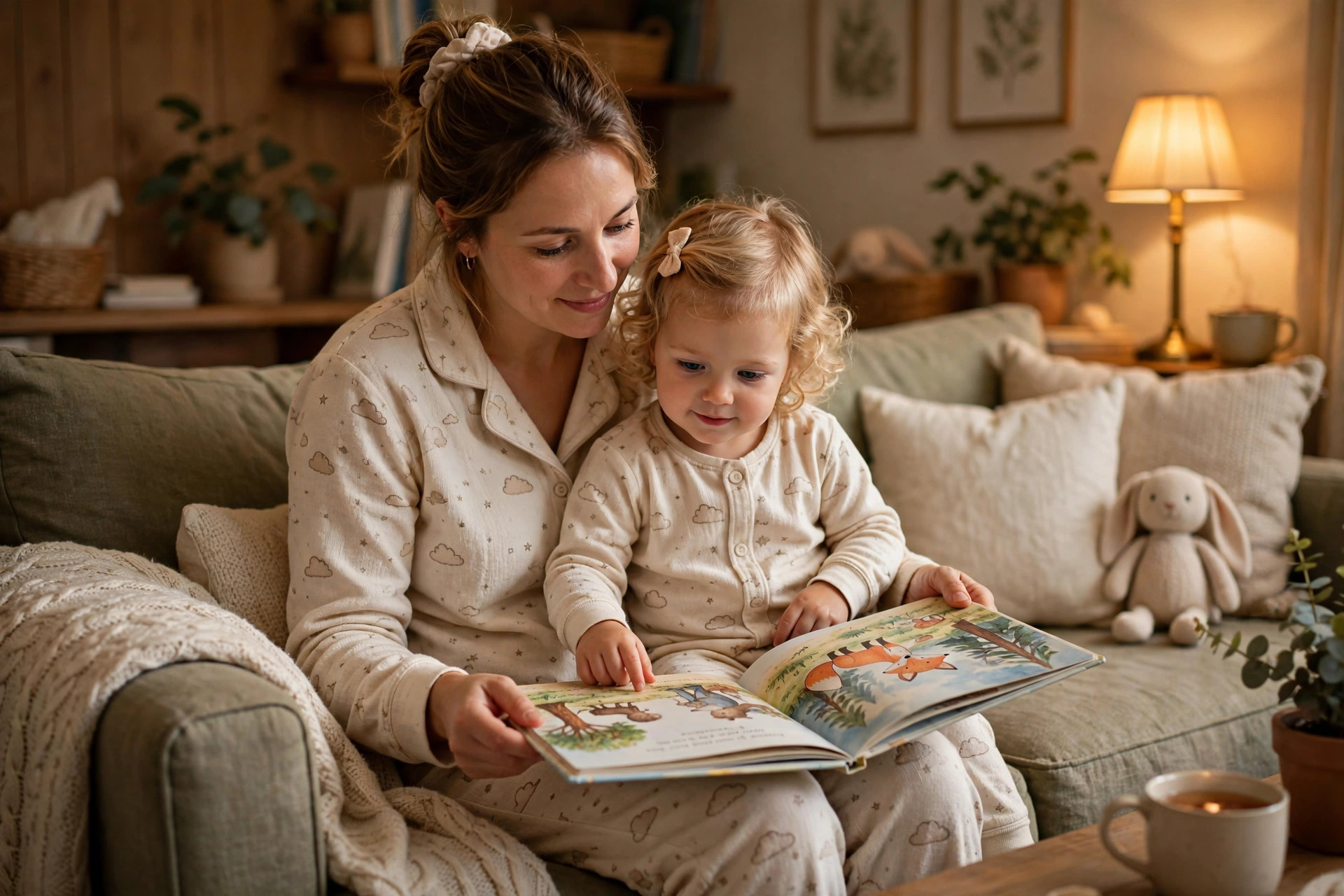
A christening, naming ceremony or first formal family occasion asks for something traditional from the baby and something respectful and comfortable from you, for what can be a long service followed by a lot of standing, holding and being photographed. For her, muslin or soft cotton in white or a pale shade is the classic choice, and the fabric table above is your guide: a traditional look does not require a stiff fabric, a tight bonnet or a long trailing gown she will tangle in. A shorter, soft ceremonial dress, or a family gown worn briefly for the service and photographs and then changed out of, respects both the tradition and the baby. Keep any head covering soft, supervised and removed for sleep or car travel, and bring a complete change of clothes, because a first formal outfit has to survive a feed and a diaper blowout before the group photo more often than anyone admits.
For you, choose a dress you can hold her in without adjusting it every two minutes, with sleeves or a wrap for a place of worship, feeding access if you need it, and shoes you can stand in on stone or grass. Coordinate through tone: her white or ivory beside your soft color reads as a pair in every photograph without you competing with the ceremonial color. Our photo shoot outfits guide covers posing and color for family photographs in more depth, and a christening is best treated as a gentle photo shoot wrapped around a service, planned, brief and baby-led. If older daughters are part of the day, our brunch outfits guide has the polished daytime register that suits the meal afterwards, while the baby’s look stays firmly in this softer lane.
Timing is the unglamorous secret. Dress her last, feed her before the photographs, and accept that the best picture may happen in the first ten minutes. A calm baby in a simple outfit photographs better than an overheated one in a masterpiece.
First Photos Without the Fuss
First photographs, whether a professional newborn session or your own camera at home, reward restraint. The PPA guide to safe newborn sessions from Professional Photographers of America sets the safety baseline every parent should expect: no electric heating pads, a warm room without overheating, natural and simple posing, a hand supporting the baby at all times, sanitized props and washed blankets and clothes, and rescheduling if anyone is ill. Ask any photographer you book how they handle those points. A good one will answer easily, because safety is their craft, not an inconvenience.
For matching photographs, the simplest formula is also the prettiest: you in a soft, solid dress with texture, her in the same color family in a plain cotton or muslin outfit with no trim near her face. Solids photograph cleaner than competing prints, skin tones matter more than props, and a plain background keeps the focus on the two faces everyone actually wants to see. If you want a print, put it on you and keep hers simple, the balance our fashion trends guide recommends for pairs of any age. Wash every outfit that will touch her before the session, keep a spare set in the same colors within reach, and plan the session around a feed, not against one. A fed, warm, briefly awake or peacefully asleep baby, in a soft outfit she has worn before, is the whole secret. The elaborate costume changes can wait for birthdays when she can tell you what she thinks of them.

First Holidays, Paced for a Baby
A first holiday season arrives with its own pressure: matching family photographs, gatherings in warm rooms full of people who love her, travel, disrupted naps and a new outfit for every event if the marketing gets its way. Resist most of it. One or two good matching outfits, worn more than once, will cover the season, and the money saved is better spent on the unphotogenic essentials. Our holiday outfits guide maps the festive looks for mothers and daughters, and for a baby the translation is: same colors, softer fabrics, no sequins, no glitter that sheds, no tight party shoes for a baby who cannot walk, and a familiar pajama set underneath the journey home.
Pace the day around her, not the photograph. Warm rooms mean fewer layers than you expect, so dress her in breathable cotton with a cardigan you control, ask anyone ill to admire her from a distance, and give her quiet time away from the noise. If the celebration involves travel, the planning spirit of our Texas trips hub and our Europe trips hub applies at baby scale too: pack the outfit flat, carry a spare, and never let the photograph outrank the nap. Closer to home, shop as our boutique finds guide suggests, one well-made soft set rather than three novelty ones.
Three Matching Sets for the First Year
A floral mom-and-baby matching dress set is the everyday foundation of a first-year matching wardrobe: a soft floral dress for you and a gentle romper version in the same print for her, sized from newborn months upward so her piece is a romper, not a dress, while she is tiny. It is the set you will reach for at home, at brunch and in the photographs that were not planned. Choose the baby size by her current weight and measurements rather than the age on the label, and wash both pieces before the first wear.

A floral romper dress set is the occasion piece: a light, airy floral dress for you and a small matching romper for her, made for a christening, a naming day or a first family portrait in warm weather. Light fabrics breathe in a crowded, warm room, which is exactly where formal baby occasions happen. Check that her version has no long sash, no loose weave her fingers can catch, and a back or front opening that makes changing her at the venue a two-minute job rather than a production.

A baby-safe matching pajama set is the holiday-morning and photo-evening favorite: coordinated soft pajamas for you both, hers simple, snug and free of trim, yours comfortable enough for a night of interrupted sleep. Enjoy them for photographs, stories and awake cuddles, and then change her into her safe sleep setup when it is actually time to sleep, as the safety section above explains. Our USA trips hub can wait for next year; this year, the matching pajama photograph on your own sofa is the trip worth taking.

Feeding, Changes and the Bag by the Door
A first-year outfit earns its place across a whole day, not a single photograph, so judge it by the day’s real events: several feeds, several changes, one spill and one nap in arms. Her outfit needs full access for a change without undressing her completely, snaps or a zip down the front or legs, and sleeves your hand can get under to guide her arm through. Yours needs feeding access if you are nursing, and a fabric that does not show every crease after an hour of holding a baby.
Pack the bag by the door as part of the outfit: a spare baby set in the same color family, a spare top for you, wipes and a muslin cloth. That kit makes matching practical, and it is the same habit that makes our mountain trips hub advice work for older daughters, plan for the change before you need it.
Washing and Care for Tiny Clothes
Wash everything before it touches her, including gifts and matching sets. Use a gentle wash, fasten snaps and tabs so they do not snag knits, turn prints inside out, and check seams and fasteners as you fold, since laundry is where a loosening button announces itself. Cotton and muslin reward this routine by getting softer, another reason they beat novelty fabrics that emerge from one wash looking tired.
Store outgrown sizes clean and complete for keepsakes or hand-me-downs, and photograph the outfit on her while it fits. The memory was the point. The fabric just carried it for a while.
Our view
We think matching with a baby is the gentlest version of this site’s whole idea. She does not care about matching. She cares about being warm but not hot, soft against the skin, fed when she is hungry and held by a mother who is comfortable in her own clothes. Get those things right and the coordination is easy: one color family, honest fabrics, a dress that fits the mother you are now. The photographs will take care of themselves, because what they will actually show is a calm baby and a mother at ease. — Mother Daughter Outfits
FAQ
When can a baby start wearing matching outfits?
From the newborn weeks, as long as the outfit is soft, breathable, correctly sized and free of strings, loose trim and detachable parts, and she is supervised and awake for photographs. Keep early outfits simple, dress her last and change her back into everyday clothes or her sleep setup afterwards. Our photo shoot outfits guide helps with the camera side once you are ready.
Are matching pajamas safe for a baby to sleep in?
Matching pajamas are for photos and awake time. For sleep, follow safe sleep guidance: baby on her back, in a crib, bassinet or play yard with a firm, flat mattress and fitted sheet, no loose bedding, soft objects or hats, and sleep clothing that is simple and not overheating. If a pajama set is loose, trimmed, hooded or floaty, it is a photo outfit, not a sleep outfit, however it is labeled in your drawer.
How do I match without buying my pre-pregnancy size?
Buy the size that fits and flatters you now, in wrap, empire or stretch styles you can adjust as your body changes, and match the baby through color and fabric family. She will change sizes constantly in the first year; you deserve one or two dresses that fit properly for as long as you wear them. Our matching wardrobe on a budget guide shows how to spend on your lasting pieces and keep her fast-changing half simple.
What should I avoid on a baby’s occasion outfit?
Drawstrings and neck ties, ribbons and sashes that can loosen, sequins and glitter, stiff collars, tight bindings, rough seams, heavy headpieces and any button, bow or stone that moves when you tug it. Also avoid overdressing for the room: a warm gathering needs fewer layers than the walk there, and a cardigan you can remove beats a thick costume you cannot.
How many matching outfits does a baby actually need?
Two or three good ones at a time in her current size: an everyday cotton set, a softer occasion set for ceremonies and portraits, and a pajama set for photos and family mornings. That covers christenings, first photos and first holidays without a drawer of outgrown novelty clothes, and each set can be reworn across several occasions while it fits.
Planning a Trip or a Matching Look?
Start with the guides other moms and daughters actually use — the Texas trips hub, the Europe breaks, and the matching-outfit guides for every age.
Sources
- How to Keep Your Sleeping Baby Safe — HealthyChildren.org
- Tips for Dressing Your Baby — HealthyChildren.org
- Safe Sleep — American Academy of Pediatrics
- Drawstrings Not Allowed — CPSC
- Children’s Sleepwear Fact Sheet — CPSC
- Positive Parenting Tips: Infants — CDC
- Postpartum Care After Vaginal Birth — Mayo Clinic
- What You Will Need for Your Baby — NHS
- Safe Newborn Photography Sessions — PPA
- Should You Put Sunscreen on Infants? — FDA
- Discrete Breastfeeding — La Leche League International
- What to Expect at a Postpartum Checkup — ACOG
- Children’s Clothing Comfort and Safety Guide — New Mexico State University Extension