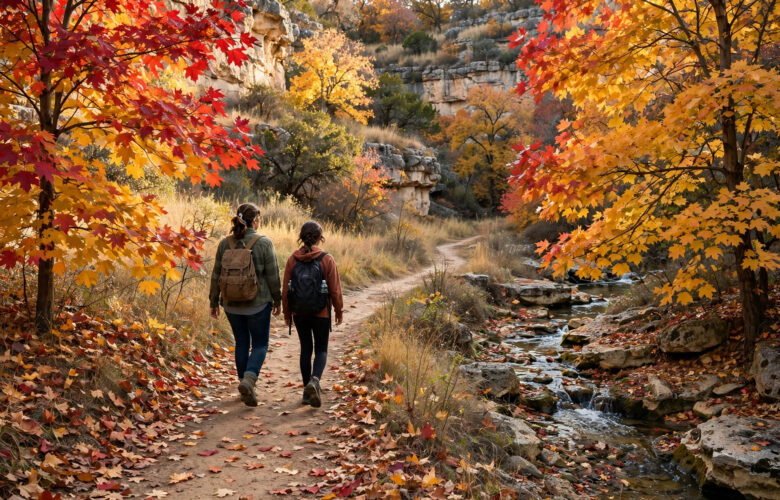
Fall is the season Texas quietly saves its best weekends for. The summer heat finally loosens its grip, the Hill Country cools down, harvest festivals fill small-town squares, football takes over Saturdays, and by November the maples turn in the canyons. The problem is that fall is really three different trips wearing one name, and picking the wrong month wastes the whole point of going. This guide solves that: it matches each fall month to what it does best, so you and your daughter get the festival, the game, or the foliage drive you actually wanted.
Mother Daughter Outfits
Texas in Fall, Month by Month
Start with the year-round Texas hub, then use this guide to pick the fall month that fits the trip you want.
Key Takeaways
- Pick your month before you pick your town, because September, October and November each peak at something different in Texas.
- Treat September as late summer with festivals, October as the full festival and football season, and November as foliage and quiet trails.
- Book the one anchor event first, a festival weekend, a game, or a foliage day pass, and build the rest of the trip loosely around it.
- Pack for two seasons in one day, since fall afternoons can feel like summer while the evenings ask for a jacket.
- Watch the official foliage reports before a November drive, because Texas fall color runs on its own schedule, not the calendar’s.
Table of Contents
- Fall at a Glance: Pick Your Month
- How Fall Changes a Texas Trip
- Harvest Season in the Hill Country
- German Festival Weekends: Fredericksburg and New Braunfels
- Football Weekends and the State Fair
- More Fall Festivals: Renaissance Days and Austin Music Weekends
- Fall Foliage Drives and the Parks That Turn
- Monarchs, Birds and the Fall Migration
- Cooler Hill Country: Hiking and Small Towns
- The Long Fall Trip: Big Bend and Palo Duro
- What to Pack and Wear in Fall
- Our view
- Frequently Asked Questions
Fall at a Glance: Pick Your Month
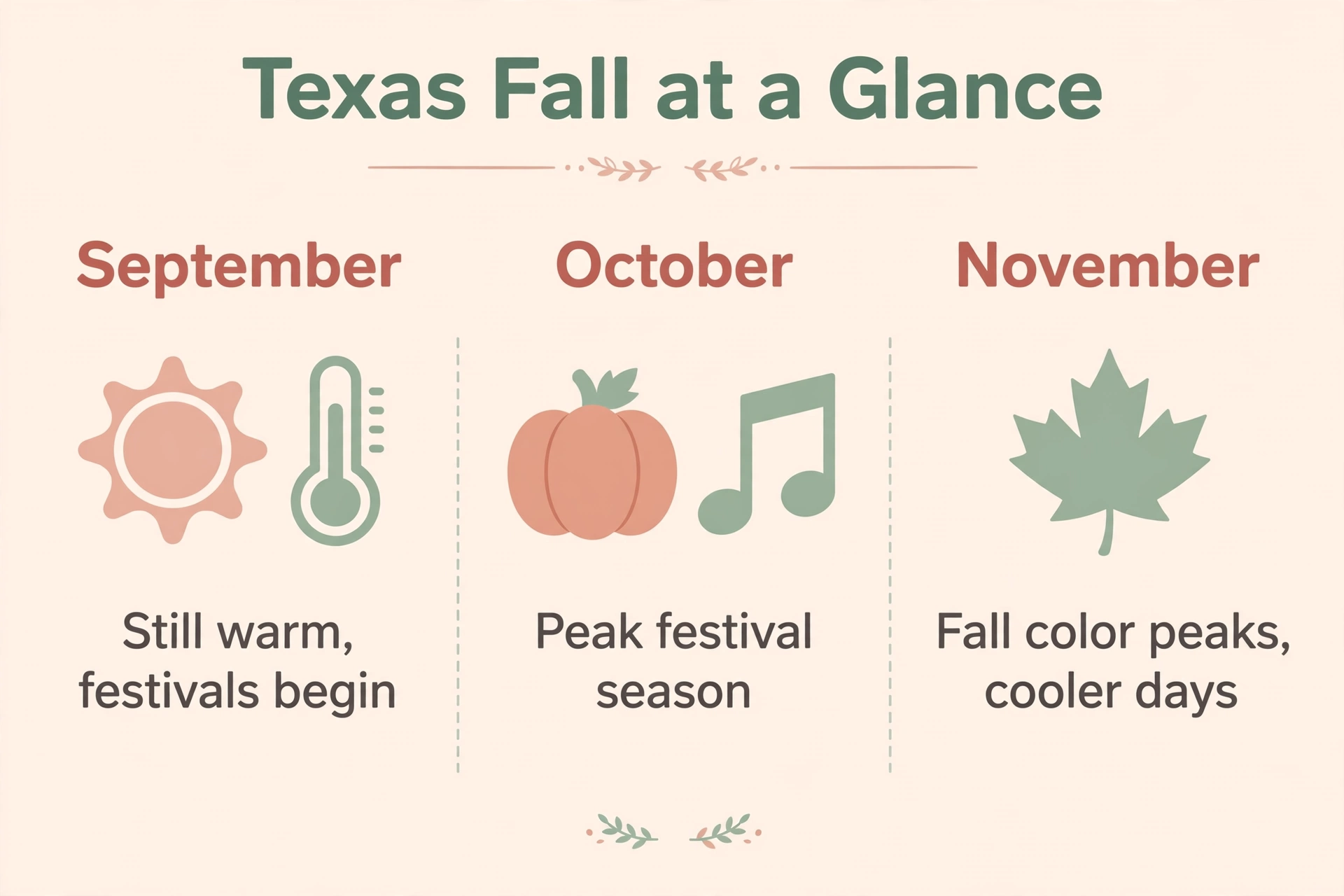
The fastest way to plan a fall trip is to stop treating fall as one season. In Texas it is a relay: September hands warm festival weekends to October, October hands peak event season to November, and November closes with the state’s real fall color and its coolest hiking weather. The table below is the whole decision in one place. If you are starting from scratch, pair it with the destination shortlist in our Texas trips hub and then come back here to choose your month.
| Fall month | What peaks then | How it feels | Best for |
|---|---|---|---|
| September | Grape harvest events, the State Fair opening, first football weekends, river days that still work | Warm, often hot at midday; the season’s easiest evenings so far | Pairs who want summer activities with fall events on top |
| October | Oktoberfest weekends, Wurstfest season begins, Renaissance festival, Austin music weekends, rivalry football | Genuinely pleasant days, cool evenings, jacket weather after dark | Festival lovers and first-time fall trippers |
| November | Fall foliage in the canyons and East Texas, monarch migration’s tail end, quiet trails, Thanksgiving-week trips | Crisp days and cold nights in the north, mild in the south | Foliage drives, hikers, and moms and daughters who prefer calm |
The weather arc, in real numbers
Central Texas shows the arc clearly. The Austin climate normals, drawn from the National Weather Service record for the city, put the average September high in the low nineties, October in the low eighties, and November in the low seventies, with average lows sliding from around seventy down to around fifty across the same span. Read that as a wardrobe instruction: September trips still plan around midday heat, October trips plan around perfect days, and November trips plan around layers. North Texas runs a few degrees cooler than those figures and the Gulf Coast a few degrees warmer, but the shape of the season is the same everywhere in the state.
Why the month matters more than the map
Most Texas fall highlights are date-locked. A harvest stomp happens when the grapes come in, a foliage canyon turns for a few weeks, a rivalry game fills one Saturday. That is why this guide is organized by the calendar first and by place second, the opposite of our year-round Texas hub, which owns the destinations themselves. Choose the month that holds your headline event, and the map mostly chooses itself.
How Fall Changes a Texas Trip
Compared with summer, four things change on a Texas trip in fall: the heat stops running the schedule, the event calendar takes over, the parks empty out on weekdays, and the light turns golden early enough to photograph everything. The towns, rivers and main streets stay the same. What changes is how much of them you can comfortably do in one day, and in fall the honest answer is almost all of it, provided you respect the one hot month at the season’s front end.
September is a bridge month, not a cool one
Plan September the way you plan late summer, with one upgrade: the evenings. Mornings and evenings become genuinely pleasant while midday still belongs to shade, water and air conditioning. That rhythm suits river towns and lake days with a festival evening attached. Book indoor or water time for the middle of the day and save your walking for after five.
October and November reward being outside all day
Once October arrives, the whole day opens up. Trails that were dawn-only in August become all-day walks, and state parks build their fall programming around exactly that window. The fall programs at Texas state parks round up the season’s harvest festivals, history days and spooky-season events across the park system, so whatever town you choose, check its nearest state park calendar too. By November the crowds thin further, and the same parks feel like they are running a private season for whoever shows up.
The season’s one real trap
Fall’s trap is assuming the whole season behaves like its best month. A September trip packed like an October one leaves you melting at a festival by noon, and a November foliage trip planned as a fixed date can miss the color entirely, because Texas leaves turn when the weather tells them to. The fixes run through this whole guide: shade and water early in the season, official reports late in the season, and one flexible day in every itinerary. If your pair is taking a first trip together this fall, the pacing advice in our first trip with a tween guide applies exactly here.
Harvest Season in the Hill Country
Fall in the Hill Country starts in the vineyard rows. The grape harvest runs from late summer into September, and the wineries along the Fredericksburg corridor turn it into the season’s most hands-on weekends: picking parties, grape stomps, and harvest dinners where visitors do a small piece of the real work before they taste anything. For a mother and daughter, it is the rare festival format built around doing something together rather than watching something together.
Picking, stomping and the harvest crew ritual
The fullest version of the ritual is the Messina Hof Hill Country harvest experience in Fredericksburg, which runs a daytime harvest like a small ceremony: check-in and an orientation with the winemaker, picking in the vineyard rows, then the old grape stomp, with tasters signing a souvenir harvest crew shirt with their own purple footprints. Daughters who are too young for tasting rooms are exactly the right age for the picking and the stomping, which is what makes harvest weekends work across generations in a way a standard winery tour never does. Book these early, because harvest dates are set by the grapes and the groups stay small.
Farm stands, orchards and the drive between them
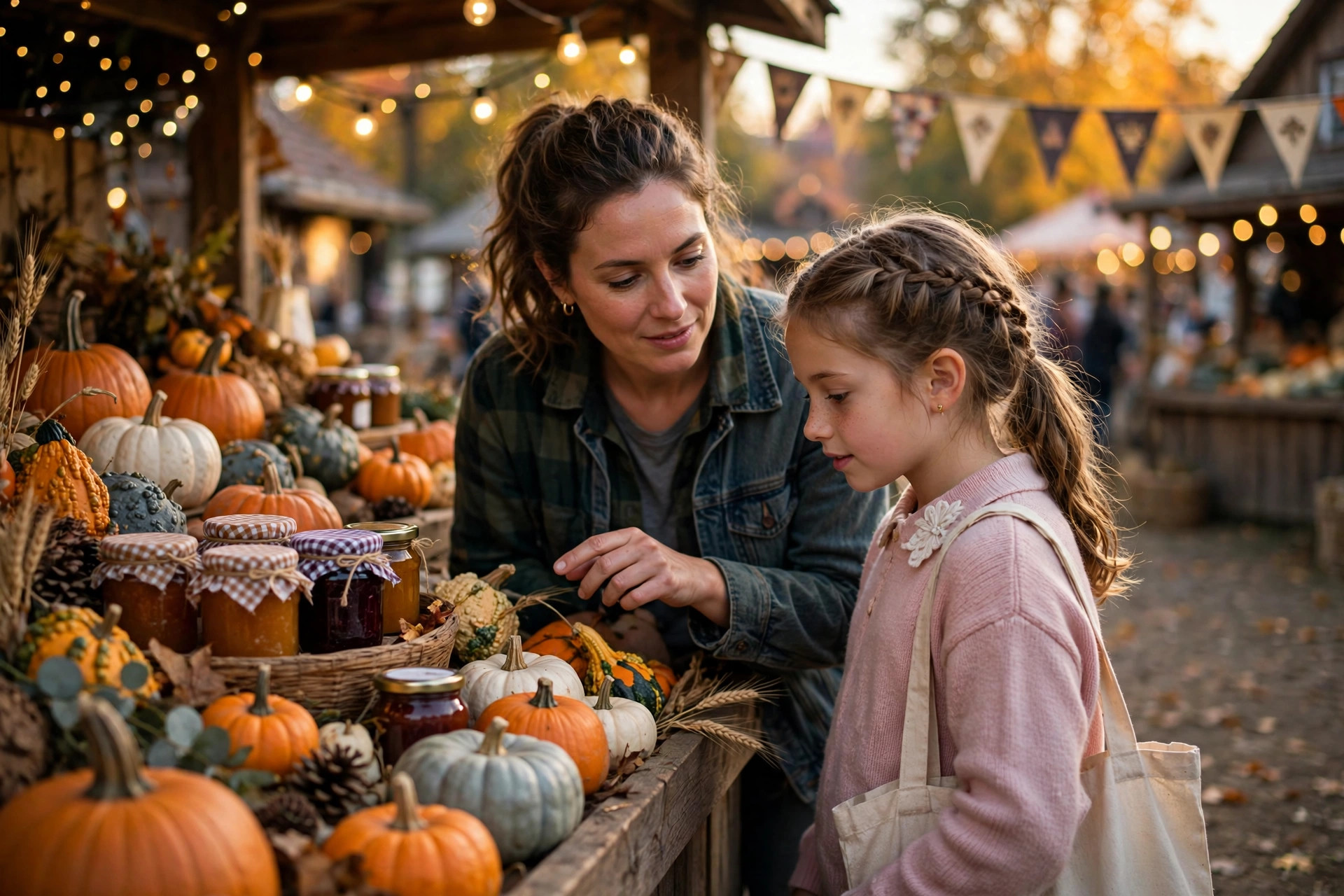
Harvest season is bigger than wine. September and October fill the Hill Country’s farm stands with apples, pumpkins, preserves and fresh pecans as the season deepens, and the Travel Texas fall guide strings the season’s pumpkin patches, corn mazes and orchard stops into the same road-trip frame as its foliage and festival picks. Build a harvest day as a drive, not a destination: a morning picking or stomping event, a slow loop of farm stands with a rule that each of you chooses one thing, and a bakery finish in town.
German Festival Weekends: Fredericksburg and New Braunfels
The Hill Country’s German towns hold fall’s happiest monopoly: two of the season’s biggest festivals, close enough to anchor two different weekends in the same autumn. Fredericksburg’s Oktoberfest owns the front of October, and New Braunfels’ Wurstfest takes ten days of November. Both are built on the same recipe, music, dancing, food stalls and a crowd that dresses up, and both are unusually good mother-daughter festivals because the fun is participatory: there is always a dance floor, a contest, or a chicken dance pulling spectators in.
Fredericksburg Oktoberfest, the season opener
The Oktoberfest fest facts give you the shape of the weekend: gates open Friday evening on the town’s Marktplatz, Saturday runs from morning to midnight, and Sunday is the gentler family day that closes in the early evening. Around the music stages you get the full program the town is known for, waltz and polka contests, artisan booths, and the dirndl and lederhosen contests that make half the crowd part of the show. The practical move is the park and ride from the county fairgrounds on the busy days, which drops you at the gate and removes the one stressful part of the weekend. Stay in town if you can, because Fredericksburg’s Main Street in the morning, bakeries open and the festival crowd still asleep, is half the charm.
Wurstfest, ten days on the Comal River
Wurstfest describes itself, accurately, as a ten-day salute to sausage, and the Wurstfest festival site lays out the grounds on the banks of the Comal River in New Braunfels: multiple music halls, carnival rides, dancing, and row after row of food booths run by local nonprofits. Two planning details matter. First, the weekday evenings are calmer and have historically included free-admission nights, which makes a school-night visit from San Antonio or Austin realistic. Second, the festival is cashless, so set up your payment method before you are standing at a sausage booth with a hungry daughter. Pair the festival with an easy second day: the river, the historic Gruene district and its old dance hall, and a slow main-street morning.
Which German weekend, if you can only pick one
Pick Fredericksburg if your daughter is younger, your pace is gentle, or you want the town itself to be half the trip. Pick Wurstfest if your daughter is older and wants scale, rides and late music, or if you are close enough to do it as a weeknight adventure. Either way, dress for standing and dancing on grass and gravel, and take the layering approach from our festival and concert outfit ideas, because festival evenings turn cool the moment the sun drops.
Football Weekends and the State Fair
In Texas, fall Saturdays belong to football, and the season’s single greatest mother-daughter spectacle is the one where the football and the fair occupy the same ground. The State Fair of Texas fills Dallas’s Fair Park for a run of more than three weeks from late September, and right in the middle of it, one October Saturday, the Cotton Bowl hosts the rivalry game that splits a stadium, and a state, cleanly in half. If Dallas is not your orbit, Austin and College Station home games make the same kind of weekend, with campus spirit standing in for midway lights.
The State Fair as a trip in itself
You do not need a game ticket to make the fair the trip. The State Fair plan your visit pages are the planning core: tickets and combo packs, the daily schedule of shows and concerts included with admission, and the practical rules on bags and outside food. Build the day the way fair veterans do: arrive at opening, do the livestock barns, exhibits and the auto show in the cool morning, eat the famous fried experiments for lunch while comparing notes like judges, then ride the Ferris wheel and catch an evening concert as the midway lights come on. One full day is the minimum, and it fits neatly into the Dallas routes in our weekend trips from Houston, Dallas and Austin.
Rivalry Saturday at the Cotton Bowl
The Texas and Oklahoma game is played at the Cotton Bowl inside the fairgrounds during the fair, which means your walk to the stadium passes corn dog stands and carnival games. The university’s own Red River Rivalry preview captures the detail daughters remember most: the crowd is divided at the fifty-yard line, burnt orange on one side and crimson on the other. Even without tickets, rivalry Saturday at the fair is an event, because the whole fairground hums with the game. If you do hold tickets, plan the fair around the game rather than the other way round.
More Fall Festivals: Renaissance Days and Austin Music Weekends
Two more October anchors round out the festival map, and they could not be more different. One dresses the two of you in costume and sends you down lanes of jousts and artisan shops for a day. The other fills an Austin park with stages for two long weekends. Both reward the same planning habit: pick your day by the program, not by the calendar’s convenience.
The Renaissance festival, a costume weekend with a plan
The Texas Renaissance Festival runs on weekends from October into late November in Todd Mission, northwest of Houston, with themed weekends that change the flavor of the grounds from one visit to the next. The festival performances guide is worth reading before you choose a weekend, because the stages carry everything from jousting and comedy to music acts across the lanes, and a daughter with a favorite theme, pirates, fairies, or the Halloween weekend, will have a decisively better day on her weekend than on a random one. Costumes are welcome and half the fun, which makes this the one festival where a mother-daughter matching effort is not just accepted but expected.
Austin’s October music weekends
Austin’s big outdoor music festival takes over Zilker Park across two October weekends, and the logistics decide whether it feels like a gift or a marathon. The festival’s own getting to the festival guide makes the key point plainly: there is no parking at the park or in the surrounding neighborhoods, so the day is built around the downtown festival shuttle, city buses, bikes or rideshare drop-offs. For a mother and daughter, the winning format is one day, not three: gates at midday, a route between two or three stages you both care about, the food stalls as your dinner plan, and the shuttle back before the final headliner crush. Teen daughters especially rate this as the fall trip, and it pairs with a lazy Sunday brunch using our mother daughter brunch outfit guide.
Spacing the big weekends
October can hold only so many headline weekends before a family burns out, so space them: one festival weekend early in the month, one football or fair weekend in the middle, and late October and November saved for the outdoors sections below. The wider American menu, for comparison, sits in our best mother daughter trips in the USA guide, but Texas’s advantage is density: everything in this section is a drive, not a flight.
Fall Foliage Drives and the Parks That Turn
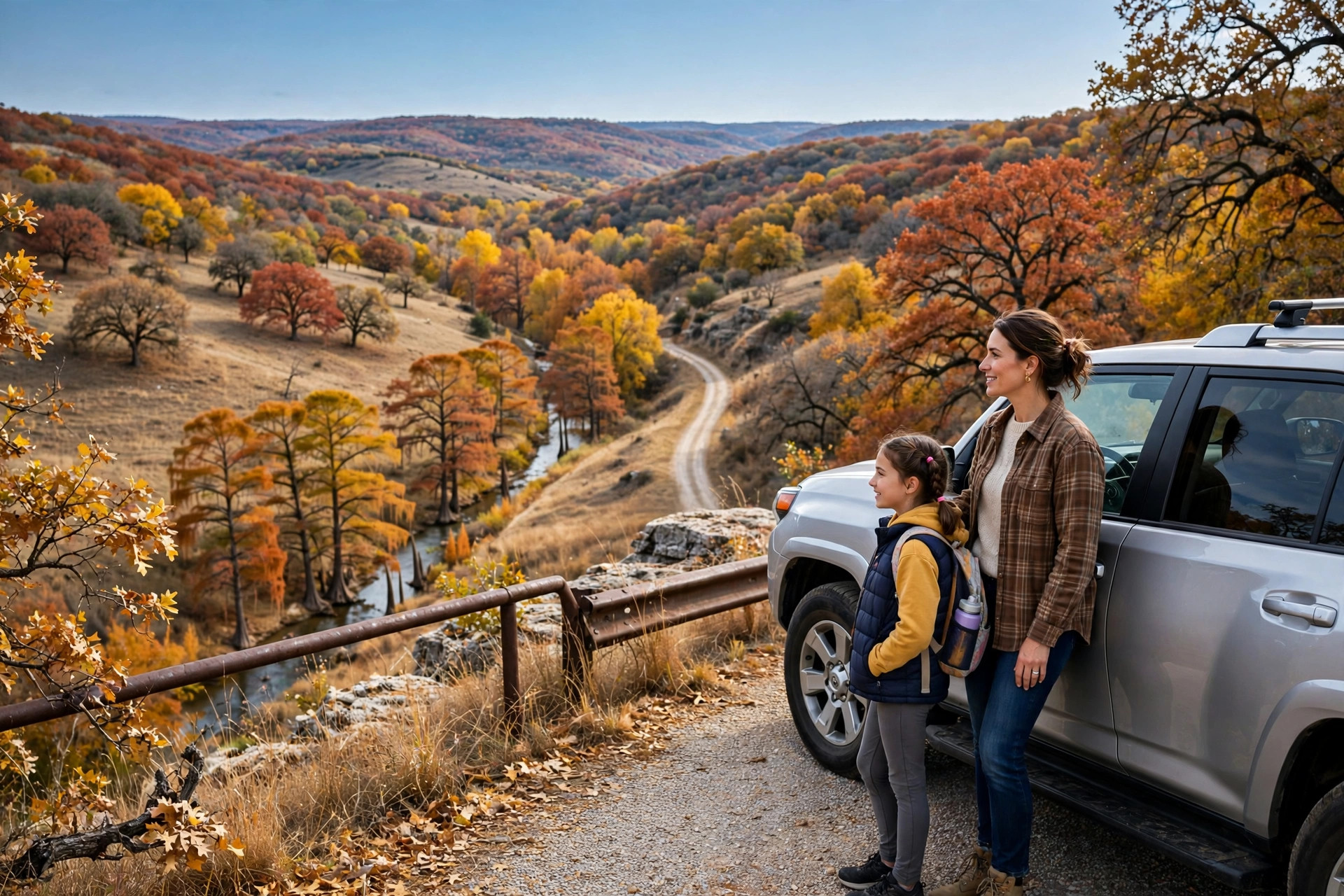
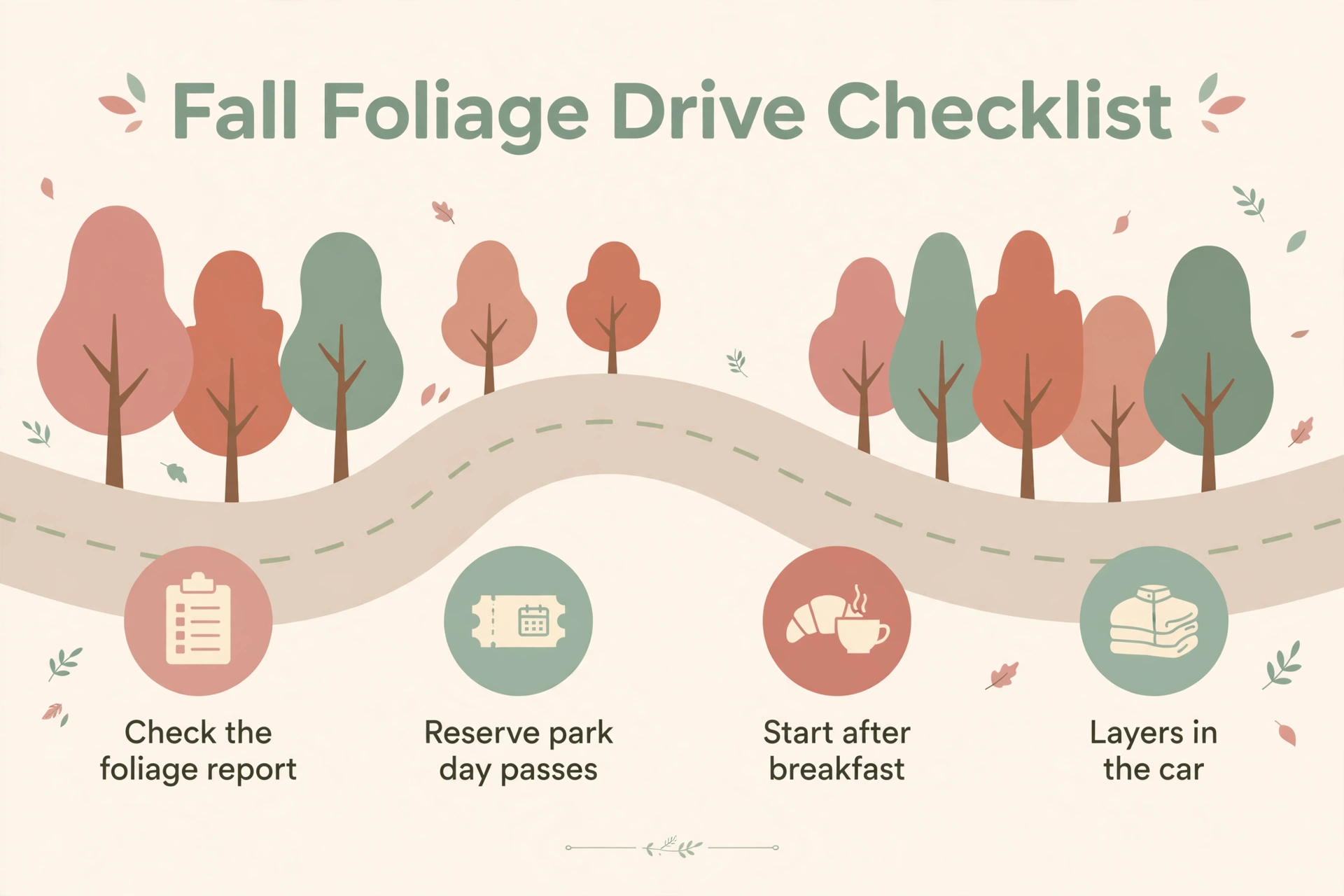
Texas fall color is real, brief and gloriously regional. It does not arrive on a statewide schedule; it builds in the coolest corners first, the high Panhandle and the deep canyons, then settles into the Hill Country and East Texas as November deepens. The mothers and daughters who see it at its best share one habit: they plan around the official reports instead of a fixed weekend, and they keep a second park in reserve in case the first one turns early or late.
Lost Maples, the headline act
Lost Maples State Natural Area protects an isolated stand of bigtooth maples in a limestone canyon on the Sabinal River, and it is the most famous fall color in the state for a reason. The park’s own fall foliage color report is the single most useful page in this guide: it is updated through the season, it tells you honestly how much color is showing, and it warns you plainly that fall weekends sell out and the park closes when its lots fill. The typical window runs from the last part of October through the first part of November. Reserve a day pass online before you go, aim for a weekday if your lives allow it, and walk the canyon trails in the morning when the light is in the leaves rather than on them.
Garner and the Frio River corridor
A short drive from Lost Maples, Garner State Park gives you the same Hill Country color in a river setting. The Garner State Park page lists the ingredients: nearly three miles of the clear Frio River, sixteen miles of trails climbing to views over the valley, and bald cypress along the banks that turn a rusty orange as the season cools. Garner is the better overnight of the two, with cabins and screened shelters that let you walk at dawn, and in fall the summer crowds are gone. Combine the two parks in one weekend, Lost Maples for the maples and Garner for the river, and you have the classic Texas foliage trip.
Monarchs, Birds and the Fall Migration
Fall is also migration season, and Texas sits in the middle of the continent’s great funnel. The spectacle most mothers and daughters can actually schedule is the monarch migration: millions of butterflies drifting south through the state on their way to their wintering forests, visible from riverbanks, park trails and even town gardens if you know when to look up.
Timing the monarch funnel
The Texas Parks and Wildlife monarch migration guide explains the state’s two fall flyways. The inland route, a corridor hundreds of miles wide running down through Central Texas, carries monarchs from the last days of September, with most passing through by early November. The coastal flyway runs later, roughly from the third week of October into the middle of November. The guide’s viewing advice is the part to plan around: river corridors such as the Frio and Sabinal, right in the foliage country of the previous section, are prime watching ground, and the butterflies move fastest ahead of a passing cool front. A foliage weekend in late October is therefore also, quietly, a monarch weekend; you just have to spend some of it looking at the sky over the river.
You do not need a tour to watch them. You need a sunny late morning, a riverbank or a patch of flowering plants, and ten unhurried minutes. Turn it into a small ritual: count every monarch you see in five minutes, write the number in a shared note, and compare it with next fall’s count if you repeat the trip. Daughters remember rituals, not lectures, and a five-minute count is exactly the kind of small, repeatable moment that our general mother daughter trips guide recommends building into every trip.
Cooler Hill Country: Hiking and Small Towns
Strip the festivals away and fall still transforms the Hill Country’s everyday pleasures. Trails that demanded a dawn start in August become all-day walks, and the region’s state parks shift into what several of them openly call their busy season, the pleasant months from September onward.
Enchanted Rock without the heat
The pink granite dome near Fredericksburg is the emblematic fall hike. The Enchanted Rock park page describes the draw plainly: climb the ancient dome for Hill Country views, then explore nearly twenty-two miles of trails through the rock formations below. Fall is when this hike turns kind; the summit in October or November, with a breeze and long views over turning oak country, bears no resemblance to the summer version. Two rules make the day: reserve your day pass ahead, because the park closes to new entries when it fills, and climb in the morning so you hold the dome before any warm afternoon builds. Pair it with a Fredericksburg evening and you have the Hill Country’s best single weekend, the same pairing the towns section of our Texas trips hub recommends in every season.
Fall is also when the Hill Country’s small towns run at their best speed: busy enough to feel alive, calm enough to linger. Wimberley, Boerne, Gruene and Luckenbach all reward the same formula, a main street in the morning, a river or trail in the afternoon, and dinner on a patio. If your daughter is older, hand her the map for one full day; the planning handover is half the point of traveling together at that age, a theme our Europe city breaks guide develops for city trips and that works just as well in small-town Texas.
The Long Fall Trip: Big Bend and Palo Duro
If fall gives you a longer stretch, a school break or the Thanksgiving week, Texas holds two big landscapes that only really open up when the heat breaks. They sit at opposite ends of the state, and choosing between them is choosing between desert mountains and canyon plains.
Big Bend as the days cool
Big Bend’s visiting season effectively begins in fall. The park’s operating hours and seasons page shows the pattern: visitor centers return to full hours from November, and the park’s busy season runs from October through spring, because that is when the desert becomes walkable. All campgrounds are by reservation, and the one lodge inside the park books early for the Thanksgiving period, the park’s famous crush week. Go in October or early November instead if you can: the same trails, river canyons and star fields, with room to breathe. Plan it with the seriousness of our mountain trips guide: fuel, water and daylight all managed deliberately.
Palo Duro, the Panhandle’s canyon
Palo Duro Canyon, the second largest canyon in the country, is fall’s other big answer, and the easier of the two for most families. The park’s trails information lays out more than thirty miles of trails, from rim walks to the Lighthouse Trail, a moderate walk of just under three miles each way to the park’s iconic rock formation. In fall the canyon floor is finally comfortable at midday, and Amarillo gives you a simple base with an easy drive in. For a first long fall trip with a younger daughter, Palo Duro is the gentler expedition; for a teen who wants to feel far from everything, Big Bend wins.
What to Pack and Wear in Fall
Fall packing for Texas is a two-season problem. September asks for summer clothes with a light layer for evenings. October asks for the season’s most versatile suitcase: clothes that work at seventy-five degrees, plus a real jacket for fifty-five. November asks you to respect the evening, especially in the north and in the Hill Country, where a festival field or a canyon rim after sunset is properly cold.
The layering system that covers all three months
Build every day’s outfit in the same three parts used for winter in our Texas winter trips guide, just lighter: a base you would happily wear at the day’s warmest hour, a middle layer for late afternoon, and an outer layer that appears at dusk. The difference is degree, not kind. In September the outer layer is a denim jacket. In November it is a proper coat, and gloves stop being a joke in the Panhandle. Our festival packing checklist covers the event-day version of this kit, from crossbody bags to portable chargers, and it transfers to fall weekends almost unchanged.
Coordinating for fall photos
Fall is the best light of the year for the two of you in photographs. Choose a shared palette drawn from the landscape, rust, cream, denim, olive, and let one piece match exactly, a scarf, a hat, matching boots, while the rest harmonizes. It photographs as intentional without reading as a costume, which is the balance our photo shoot outfits guide recommends for every season. Finish the list with broken-in walking shoes, a small umbrella in October, and sunscreen even in November.
Our view
Fall is the season we would hand a Texas skeptic, because it answers the state’s two honest criticisms, the heat and the distances, in a single season. The heat leaves. The distances turn into foliage drives and festival hops with your daughter riding shotgun and choosing the music. Do not try to do all of it in one autumn. Pick the month that matches the daughter you have right now, a stomping, dancing, counting-butterflies little girl or a teen who wants a stadium and a stage, and let the other falls wait for her next age. They will still be there, and so, if you keep taking these trips, will the two of you.
— Mother Daughter Outfits
Frequently Asked Questions
Which fall month is best for a mother daughter trip in Texas?
October, for most pairs. It holds the fullest festival calendar, the rivalry football weekend, the State Fair, and the first genuinely comfortable hiking weather. Choose September if you want harvest events and river days, and November if foliage, quiet trails and cooler air matter more than events.
When does fall color peak in Texas?
Later than most visitors expect, and it varies by region and by the year’s weather. The Hill Country maples typically turn from late October into early November, the Panhandle and high country can start earlier, and East Texas often colors last. Always check the official park foliage reports in the week you travel rather than trusting a fixed date.
Is September too hot for a fall trip?
For midday festivals and long hikes, it can be; September in Texas is best planned like late summer, with water, shade and indoor time in the middle of the day. Its evenings, though, are lovely, and its calendar, harvest events, the fair’s opening and the first football weekends, makes the planning worth it.
What should we wear to a fall festival in Texas?
A comfortable base for the day’s warmest hour, a layer you can tie or carry for the evening, and closed shoes that can handle grass, gravel and dancing. Add a real jacket for November events and for anything in the Panhandle or the Hill Country after dark.
How many fall weekends should we plan?
Two or three across the whole season is the sweet spot: one event weekend in October, one outdoors or foliage weekend in November, and a harvest or fair weekend in September if your calendar allows. Spaced out, each one feels like its own small season, and nobody comes home festival-tired.
Planning a Trip or a Matching Look?
Start with the guides other moms and daughters actually use — the Texas trips hub, the Europe breaks, and the matching-outfit guides for every age.
Sources
- Texas Parks and Wildlife Lost Maples Fall Foliage Color Report
- Texas Parks and Wildlife Garner State Park
- Texas Parks and Wildlife Enchanted Rock State Natural Area
- Texas Parks and Wildlife Palo Duro Canyon State Park Trails
- Texas Parks and Wildlife Monarch Butterfly and Texas Nature Trackers
- Texas Parks and Wildlife Fall Into Outdoor Fun at Texas State Parks
- State Fair of Texas Plan Your Visit
- Texas Longhorns Forty Acres Insider Red River Rivalry Preview
- Oktoberfest Fredericksburg Fest Facts
- Wurstfest New Braunfels Official Festival Site
- Texas Renaissance Festival Performances
- Austin City Limits Festival Getting Here Guide
- National Park Service Big Bend Operating Hours and Seasons
- Travel Texas Fall Activities Guide
- Messina Hof Hill Country Harvest Festival
- Austin Weather and National Weather Service Climate Normals